
In today’s world, where smartphones have become an indispensable part of daily life, the anxiety caused by a dying battery is something almost everyone has experienced. From everyday activities like QR code payments and navigation to work communications and entertainment, a dead phone can instantly disrupt one’s rhythm. As a result, shared power banks have quickly evolved from a “new convenience” into a standard service in shopping malls, restaurants, hair salons, and other venues.
However, a notable new trend is emerging: a growing number of savvy merchants are choosing to purchase their own self-payment-enabled shared power banks, rather than passively accepting devices placed by third-party platforms. What is the business logic behind this shift?
Soaring Demand: Battery Anxiety Creates a Real Need
Let’s start with a basic fact—our dependence on smartphones has never been greater.
Whether it’s a customer waiting for a meal, a consumer standing in line, or a professional working temporarily on the go, a “low battery” warning often means an abrupt interruption. For merchants, being able to offer convenient charging is not just a thoughtful value-added service, but also an effective way to increase customer dwell time and enhance the overall experience.
When customers no longer worry about their battery level, they are more likely to order another drink or browse a few more stores. Shared power banks are no longer a “nice-to-have” extra—they have become a real tool for retaining customers.
Self-Payment: Double the Revenue, Transparent and Secure Income
In the past, when merchants accepted power bank devices installed by third-party platforms, they typically received only a small share of the revenue, with most of the profit taken by the platform. More frustratingly, settlement cycles were long and statements were often unclear. The modest return from providing floor space and electricity was hard to quantify.
But when merchants choose to purchase their own self-payment-enabled shared power banks, the situation changes completely.
A power bank device that allows full self-payment can generate several times more revenue than devices installed by others. Every rental fee goes directly into the merchant’s own account, without any third-party platform taking a cut or delaying settlement. Cash flow is transparent, earnings are visible in real time, and operational data is clear.
This means merchants are no longer “working for the platform”—they truly own the entire revenue stream from the charging service. For stores with steady daily foot traffic, this extra income adds up to a considerable amount of pure profit over time.
A Mature Hardware and Software Market: Complete Services Without Worry
In the past, merchants hesitated to buy their own equipment because of concerns about technical barriers and lack of after-sales support. But today, the shared power bank hardware and software market has matured significantly. Professional brands can provide merchants with one-stop, full-service support.
Take BaoFeng Charging as an example. This brand has always adhered to a core principle: real revenue, paid directly to the merchant. All rental income goes directly into the merchant’s own account, bypassing any third-party platform entirely. This eliminates any risk of fund retention or opaque accounting.
On the hardware side, BaoFeng Charging’s devices are durable, widely compatible, support mainstream fast-charging protocols, and are adaptable to various commercial environments. On the software side, its management system is fully featured, allowing merchants to check device status, rental records, and revenue reports in real time, with easy remote management.
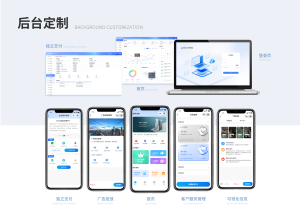
Moreover, BaoFeng Charging understands that every merchant’s scenario is different. Therefore, it offers highly flexible customization services—both hardware and software can be tailored. Whether it’s appearance color, brand logo, pricing rules, or rental time periods, everything can be adjusted as needed. Most impressively, customization is available even for a single unit. This low-threshold, flexible model has completely lowered the barrier for small and medium-sized merchants to give it a try.
From Passive Acceptance to Active Operation
Overall, the shift from passively accepting third-party devices to actively purchasing self-payment power banks reflects not only a change in mindset but also a strategic optimization of business operations.
-
Revenue perspective: Self-payment brings multiplied earnings, with transparent cash flow and real-time settlement.
-
Service perspective: Convenient charging enhances customer experience and increases in-store dwell time.
-
Control perspective: Customizable hardware and software allow the device’s look and feel to blend seamlessly with the store’s image.
-
Support perspective: Mature brands offer comprehensive after-sales and technical support, removing worries about maintenance.
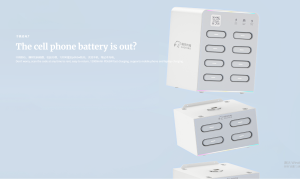
Shared power banks are no longer just a convenience service—they have become a small, independently operated business with stable returns. Brands like BaoFeng Charging, which truly deliver on the promise of “real revenue,” are helping more and more merchants make this business easy, transparent, and sustainable.
If you are a merchant looking to enhance your store’s service experience while creating additional income, why not learn more about BaoFeng Charging? Start with one custom device, and keep the charging revenue securely in your own hands.