
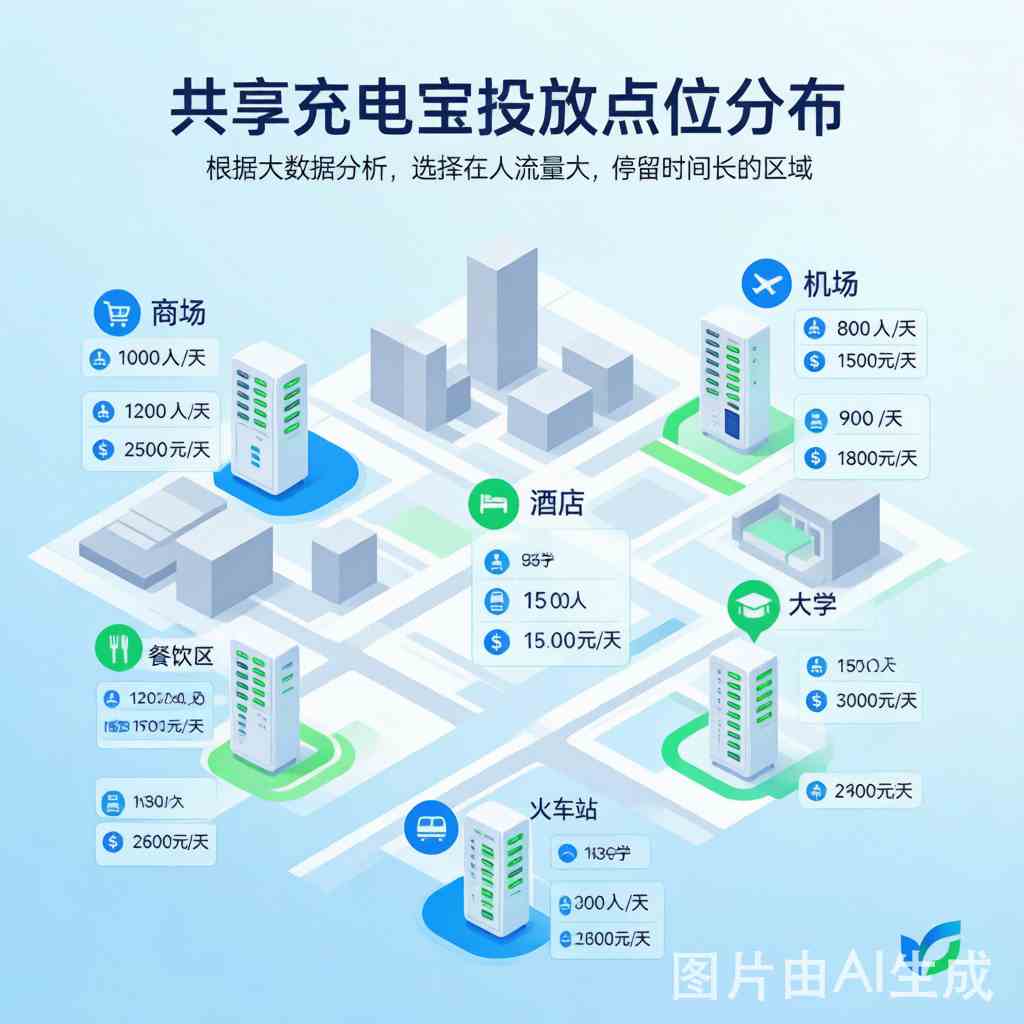
Choosing the right shared power bank station locations is the single most important decision you’ll make in your power bank rental business. Whether you’re launching your first deployment in Southeast Asia, expanding across the Middle East, or scaling operations in Latin America, where you place your stations directly determines your revenue, user adoption, and long-term profitability. A well-positioned station in a high-traffic area can generate 5 to 10 times more rentals than one placed in a low-traffic zone. This comprehensive guide walks you through everything you need to know about site selection, deployment strategy, and location optimization for shared power bank businesses.
Why Shared Power Bank Station Locations Matter More Than Anything Else
In the shared power bank industry, location is not just important 鈥?it’s everything. The fundamental business model relies on spontaneous, impulse-driven rentals. Users don’t plan to rent a power bank; they rent one when their phone battery drops unexpectedly. This means your station must be exactly where people experience battery anxiety, and they must see it at the moment of need.
Consider these data points from operators across multiple markets:
- High-traffic mall stations average 30鈥?0 rentals per day per 6-slot cabinet
- Airport terminals can reach 80鈥?20 rentals daily during peak travel seasons
- Low-traffic office building lobbies may only see 3鈥? rentals per day
- Street-side placements without shelter often underperform due to weather damage and low visibility
The difference between a profitable deployment and a money-losing one comes down to understanding user behavior, traffic patterns, and the specific dynamics of each shared power bank station location. Every market has its own nuances 鈥?what works in Bangkok may not work in Dubai, and the best spots in Jakarta differ from those in S茫o Paulo.
Top High-Traffic Shared Power Bank Station Locations
1. Shopping Malls and Retail Centers
Shopping malls remain the gold standard for shared power bank station locations. Visitors spend 2鈥? hours browsing stores, using their phones for navigation, comparison shopping, taking photos, and staying connected. Battery anxiety peaks during extended shopping sessions, and mall visitors are already in a consumption mindset, making rental payments feel natural.
Best placement spots within malls:
- Main entrance lobbies where all visitors pass through
- Food court areas where people sit for extended periods
- Near cinema ticket counters and waiting areas
- Restroom corridor junctions with high foot traffic
- Electronics and phone stores 鈥?users experiencing battery issues naturally gravitate toward these areas
Pro tip: Negotiate with mall management for corner placements at intersection points. Stations visible from two corridors simultaneously capture traffic from both directions, doubling your potential user base.
2. Restaurants, Cafes, and Food Courts
Food service venues are excellent shared power bank station locations because diners stay seated for 30鈥?0 minutes, often using their phones intensively while waiting for food or eating. The rental becomes a convenience service that enhances their dining experience.
Key advantages:
- Diners are stationary 鈥?they can rent, charge, and return within one visit
- Phone usage during meals is culturally universal across all markets
- Return rates are exceptionally high since users finish dining before leaving
- Restaurants benefit from keeping customers comfortable and longer-seated (more orders)
Target chain restaurants, popular local eateries, and cafes near business districts. Fast-food chains with standardized layouts make scaling particularly efficient 鈥?once you secure one location in a chain, replicating across other branches becomes straightforward.
3. Transportation Hubs: Airports, Train Stations, Bus Terminals
Transportation hubs generate the highest rental volumes per station of any shared power bank station location category. Travelers are the ideal user profile: they’re away from home, relying heavily on their phones for tickets, navigation, communication, and entertainment during transit, and they experience peak battery anxiety.
Performance metrics from airport deployments:
- Average rental duration: 2鈥? hours (longer than typical 1-hour urban rentals)
- Peak hours: early morning (6鈥? AM) and evening (5鈥? PM) commute windows
- Revenue per slot: 2鈥?x higher than mall locations
- Seasonal spikes: 40鈥?0% increase during holiday travel periods
When targeting airports, focus on departure gate waiting areas, baggage claim zones, and food court sections. Avoid check-in counters where travelers are rushed and focused on paperwork rather than phone usage.
4. Hotels and Hospitality Venues
Hotels represent a premium shared power bank station location because guests are travelers who’ve left their chargers at home or in their room. Lobby placements capture both arriving guests (who’ve drained batteries during travel) and departing guests (who need a final charge before heading out).
Optimal hotel placement points:
- Main lobby reception area 鈥?visible to all guests upon arrival
- Conference and meeting room corridors for business travelers
- Pool and recreation areas where guests relax and use phones heavily
- Restaurant and bar areas within the hotel
Partner with hotel management to offer the power bank station as a guest amenity. Many hotels welcome this as a free value-add service that improves guest satisfaction scores without any investment on their part.
5. Universities and Educational Campuses
Students are power-hungry users. Between classes, study sessions, socializing, and constant phone usage, university campuses offer dense, consistent traffic for shared power bank station locations. The student demographic is also tech-savvy and quick to adopt rental services.
Target areas on campuses:
- Main library entrances and study halls
- Student union buildings and common areas
- Cafeteria and food service zones
- Dormitory entrance halls
- Lecture hall corridors between classrooms
Universities also offer partnership opportunities. Some operators negotiate exclusive campus contracts that include brand placement, subsidized pricing for students, and guaranteed minimum revenue arrangements.
6. Entertainment and Event Venues
Concert halls, sports stadiums, theme parks, and convention centers generate intense, concentrated demand. During events, thousands of attendees simultaneously drain batteries taking photos, videos, posting on social media, and communicating with friends.
The challenge with entertainment venues is demand inconsistency 鈥?massive spikes during events followed by quiet periods. Smart operators solve this with modular station designs that can be temporarily added during major events and relocated to steady-traffic locations during off-peak times. Baofeng Charge’s flexible cabinet designs support exactly this kind of dynamic deployment strategy.
How to Evaluate Potential Shared Power Bank Station Locations
Not every high-traffic spot is a good shared power bank station location. You need a systematic evaluation framework that goes beyond simple foot traffic counting. Here’s a comprehensive scoring model:
The 6-Factor Location Evaluation Framework
1. Foot Traffic Volume (Score: 1鈥?0)
Measure actual pedestrian flow during different time periods. Don’t rely on estimates 鈥?install temporary counters or use existing mall/building traffic data. Weight morning, afternoon, and evening flows differently based on your market’s rental patterns.
2. Dwell Time (Score: 1鈥?0)
How long do people stay in the area? Longer dwell times correlate directly with higher rental rates and better return ratios. A corridor people walk through in 30 seconds scores lower than a food court where people sit for an hour.
3. Phone Usage Intensity (Score: 1鈥?0)
Observe how actively people use phones in the area. Waiting areas, dining zones, and entertainment spaces score high. Transit corridors where people are rushing score low, despite potentially high foot traffic.
4. Visibility and Accessibility (Score: 1鈥?0)
Can users see the station from 10 meters away? Is it accessible without obstacles? Stations hidden behind pillars or tucked in corners miss impulse rental opportunities. The ideal placement is at eye level, well-lit, and in a natural pause point in foot traffic flow.
5. Power and Network Infrastructure (Score: 1鈥?0)
Does the location have reliable electricity and internet connectivity? Shared power bank cabinets need continuous power for charging and network connectivity for payment processing, user authentication, and remote monitoring. Locations with unstable infrastructure will cause operational headaches.
6. Security and Maintenance Access (Score: 1鈥?0)
Is the location safe from vandalism and theft? Can your operations team easily access the station for maintenance, inventory replenishment, and troubleshooting? Indoor locations generally score higher than outdoor placements.
Target minimum composite score: 35/60 for a viable deployment. Scores below 30 suggest the location isn’t ready without infrastructure improvements or renegotiated placement terms.
Shared Power Bank Deployment Strategy: From Pilot to Scale
Phase 1: Market Research and Pilot Testing
Never deploy across an entire city without pilot testing. Start with 5鈥?0 stations in your target market’s most promising shared power bank station locations. These pilot stations generate real data on rental patterns, peak hours, average rental duration, return rates, and revenue per slot.
Pilot deployment checklist:
- Select 3鈥? different location categories (mall, restaurant, transport hub, hotel, campus)
- Deploy 2 stations per category for comparison data
- Run the pilot for minimum 30 days, ideally 60鈥?0 days
- Track metrics: daily rentals, revenue, return rate, user feedback
- Analyze which location types perform best in this specific market
Different markets reveal different patterns. In Southeast Asia, food courts and malls dominate. In the Middle East, hotel and airport locations outperform. In Latin America, university campuses and transit stations lead. Your pilot data tells you where to concentrate investment.
Phase 2: Strategic Expansion Based on Data
Once pilot data identifies your top-performing shared power bank station location categories, scale aggressively within those categories. The 80/20 rule applies: 80% of your revenue will come from 20% of your location types. Focus expansion capital on proven winners rather than experimenting with marginal categories.
Expansion priorities:
- Double down on top-performing location categories first
- Within each category, target the highest-traffic individual sites
- Negotiate multi-location contracts with chain businesses (mall groups, hotel chains, restaurant franchises)
- Build geographic clusters 鈥?saturate one district before moving to the next
Geographic clustering reduces operational costs. When 10 stations are within a 3-kilometer radius, your field team can service all of them in one route, cutting logistics expenses by 40鈥?0% compared to scattered deployments across the entire city.
Phase 3: Optimization and Network Density
As your network grows, focus shifts from finding new shared power bank station locations to optimizing existing ones. Network density creates competitive advantages: users recognize your brand across multiple locations, trust the service, and develop habitual rental behavior.
Optimization strategies:
- Station sizing: Match cabinet capacity to actual demand. Upgrade 6-slot stations to 12-slot or 24-slot in proven high-demand locations
- Dynamic pricing: Adjust rental rates by time of day, location category, and demand level
- Cross-location returns: Enable users to return power banks at any station in your network, not just the original rental location
- Data-driven repositioning: Move underperforming stations to better locations within the same venue or to new venues
Cross-location returns are particularly powerful. They eliminate the biggest user friction point 鈥?having to return to the exact rental location. When users can drop off power banks anywhere in your network, rental frequency increases by 25鈥?0% according to operator data across multiple markets.
Outdoor vs. Indoor Shared Power Bank Station Locations
The choice between indoor and outdoor shared power bank station locations significantly impacts performance, durability, and operational costs.
Indoor Locations: Advantages and Trade-offs
Advantages:
- Climate-controlled environment protects equipment longevity
- Higher visibility in enclosed spaces with directed foot traffic
- Better security 鈥?reduced vandalism and theft risk
- Reliable power and network infrastructure
- Longer operating hours in many venues (malls often open 10+ hours daily)
Trade-offs:
- Revenue sharing or rental fees for the floor space
- Placement restrictions imposed by venue management
- Limited to venue operating hours
- Dependency on venue management relationship
Outdoor Locations: Advantages and Trade-offs
Advantages:
- 24/7 accessibility 鈥?no closing hours limitation
- Street-level visibility captures spontaneous walk-by traffic
- Lower or zero placement costs in some public areas
- Independence from venue management constraints
Trade-offs:
- Weather exposure reduces equipment lifespan by 30鈥?0%
- Higher vandalism and theft risk
- Inconsistent power and network connectivity
- Maintenance costs 2鈥?x higher than indoor stations
- Regulatory permitting requirements for public space placement
Recommendation: Prioritize indoor shared power bank station locations for your first 80% of deployments. Reserve outdoor placements for proven high-traffic public areas (busy street corners, public transit stops, popular tourist walkways) where the 24/7 access advantage outweighs the higher operational costs.
Local Market Considerations for Shared Power Bank Station Locations
Southeast Asia
In markets like Thailand, Vietnam, Indonesia, and the Philippines, shared power bank station locations should prioritize:
- Street food areas and night markets 鈥?massive foot traffic, extended dwell times, heavy phone usage for photos and social media
- 7-Eleven and convenience store chains 鈥?ubiquitous presence, consistent traffic, strong partnership potential
- Shopping malls 鈥?central social hubs in SEA cities where people gather, dine, and socialize
- Public transit stations 鈥?BTS/MRT stations in Bangkok, MRT in Jakarta, bus terminals everywhere
Cultural note: Southeast Asian users are extremely social-media active. They rent power banks not just for emergency charging but for maintaining their Instagram, TikTok, and Line/Facebook activity. Marketing your stations as “social media fuel” resonates strongly in these markets.
Middle East
In UAE, Saudi Arabia, Qatar, and neighboring markets:
- Luxury hotels and malls 鈥?high-spending user base, premium rental pricing viable
- Airports 鈥?massive transit traffic, international traveler profile
- Business districts and corporate towers 鈥?professional users with consistent demand
- Prayer areas near mosques 鈥?extended dwell times during prayer sessions, phone usage before/after
The Middle East market supports higher rental pricing due to higher average income levels. Premium station designs with sleek aesthetics perform better than budget-oriented cabinets.
Latin America
In Brazil, Mexico, Colombia, and emerging markets:
- University campuses 鈥?huge student populations, high phone dependency
- Public transport hubs 鈥?bus terminals, metro stations with daily commuter traffic
- Popular restaurant and bar districts 鈥?social culture drives extended phone usage
- Beach and tourist areas 鈥?seasonal spikes during holiday periods
Latin American markets often require more flexible payment options. Ensure your stations support local payment methods beyond international credit cards 鈥?PIX in Brazil, OXXO in Mexico, and local mobile wallets.
Revenue Models for Different Shared Power Bank Station Locations
Your revenue model should adapt to the shared power bank station location category. Different locations support different pricing strategies:
| Location Type | Avg. Rental Duration | Recommended Pricing | Revenue/Slot/Day |
|---|---|---|---|
| Airport | 2鈥? hours | /hour | |
| Mall | 1鈥? hours | .50鈥?/hour | |
| Restaurant | 30鈥?0 min | .50 flat or .30/hour | |
| Hotel | 2鈥? hours | .80鈥?.50/hour | |
| University | 1鈥? hours | .30鈥?.50/hour | |
| Street/Outdoor | 30鈥?0 min | .50鈥?/hour |
These are benchmark ranges. Actual pricing depends on local income levels, competitive dynamics, and your cost structure. Always start with market-appropriate pricing during your pilot phase and adjust based on actual user behavior and revenue data.
Common Mistakes to Avoid When Choosing Shared Power Bank Station Locations
After analyzing hundreds of deployments across multiple markets, these are the most costly mistakes operators make:
Mistake 1: Prioritizing Coverage Over Density
Many new operators try to cover an entire city with sparse deployments 鈥?one station per district. This “spray and pray” approach creates a fragmented network that’s invisible to most potential users and expensive to service. Instead, concentrate 15鈥?0 stations in your best district first, establish brand recognition and operational efficiency, then expand district by district.
Mistake 2: Ignoring Dwell Time
High foot traffic doesn’t automatically mean high rentals. A busy pedestrian bridge where people walk through in 20 seconds generates fewer rentals than a quiet caf茅 where 50 people sit for an hour. Always evaluate dwell time alongside foot traffic volume when selecting shared power bank station locations.
Mistake 3: Poor Station Visibility
Even in perfect locations, stations that users can’t see don’t generate rentals. Place stations at natural pause points (waiting areas, seating zones, intersection corners) where people slow down and look around. Avoid placements behind obstacles, in shadowy corners, or at floor level where they’re invisible from 5 meters away.
Mistake 4: Neglecting Venue Relationships
Your station lives in someone else’s property. Building strong relationships with venue managers, mall operators, restaurant owners, and property managers is essential. Poor relationships lead to placement restrictions, delayed maintenance approvals, and eventually eviction. Strong relationships unlock premium placement spots, co-marketing opportunities, and favorable revenue-sharing terms.
Mistake 5: Skipping the Pilot Phase
Confidence without data is gambling. Operators who skip pilot testing and deploy 50+ stations immediately often discover 鈥?painfully 鈥?that their location assumptions were wrong for this specific market. The pilot phase costs a fraction of full deployment but provides the data that prevents expensive mistakes.
Technology Tools for Optimizing Shared Power Bank Station Locations
Modern shared power bank operations leverage technology to continuously optimize shared power bank station locations and deployment strategies:
- IoT monitoring dashboards: Real-time data on rental rates, battery levels, and station health across all locations
- Heatmap analytics: Visualize rental density by time of day and location to identify patterns and optimization opportunities
- Geographic information systems (GIS): Map competitor stations, traffic flow data, and demographic overlays to find underserved high-potential areas
- AI-powered demand forecasting: Predict rental volumes at potential new locations based on historical data from similar site types
- Mobile app user analytics: Track where users search for stations, identify demand pockets without existing coverage
Baofeng Charge’s management platform provides all these analytics tools in an integrated dashboard, enabling data-driven location decisions rather than guesswork.
Conclusion: Your Shared Power Bank Station Location Strategy
Success in the shared power bank business starts with strategic shared power bank station locations. The framework is clear: pilot test in diverse location categories, analyze real performance data, concentrate investment in proven winners, build geographic clusters for operational efficiency, and continuously optimize based on analytics.
Remember these core principles:
- Location precedes everything 鈥?even great equipment and software can’t overcome poor placement
- Dwell time matters more than raw foot traffic 鈥?people need time to notice and act
- Indoor first, outdoor selectively 鈥?protect your investment and maximize visibility
- Density over coverage 鈥?saturate winning districts before expanding territory
- Local market adaptation 鈥?respect cultural patterns, payment preferences, and traffic dynamics
- Data over assumptions 鈥?pilot, measure, then scale with confidence
Ready to deploy your shared power bank stations in the best locations? Contact Baofeng Charge for location strategy consulting, premium equipment, and the management platform that turns data into profitable deployment decisions.