
In early 2026, an email from Jakarta landed in the sales inbox of Baofeng Charge’s Shenzhen office. There was no small talk — just a dozen photos. A chain café on Jakarta’s Sudirman corridor. The atrium of a mall in Surabaya. A convenience store by Kuta Beach in Bali. In every photo, there was a queue in front of a Baofeng Charge cabinet.
That was the moment it became real. A piece of shared power bank hardware assembled, tested and crated in a Shenzhen factory was now sitting on the other side of the planet, being scanned and rented by people who had never heard of us a year earlier.
If you are evaluating the shared power bank Indonesia opportunity — whether it works, what it takes, and what you actually need to prepare — this article walks through the full path using Baofeng Charge’s first overseas market as the case study.
One Cabinet, and What It Signals
Baofeng Charge is a Shenzhen-based manufacturer that builds complete shared power bank systems. Before 2025, “Indonesia” was just a name on a map. After those photos arrived, it became something specific: equatorial sunlight, a queue of young users, and a QR code glowing on the front of a cabinet.
In this industry, shipping hardware overseas is never simply a matter of moving goods. The machine has to run for a full year without failure on a different power grid, in a different payment environment, and in a completely different climate. When the Indonesian operator sent that report card back, we knew the product had passed.
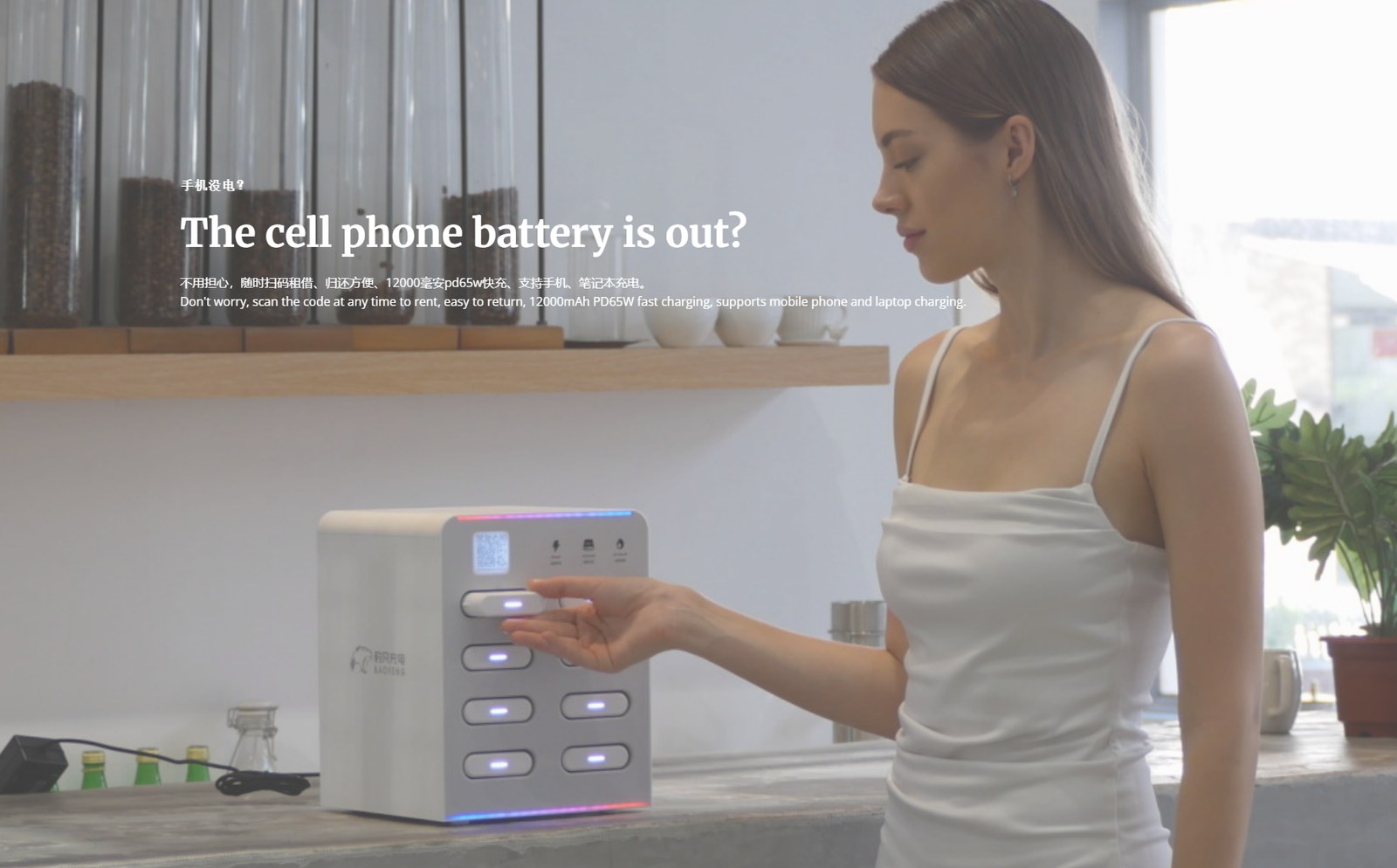
Who Is Baofeng Charge? The Manufacturer-Only Model
Baofeng Charge (BAOFENG CHARGE) was founded in Shenzhen and is one of the few brands in China’s shared power bank industry that still builds its own complete hardware.
That sounds unglamorous. China’s domestic shared power bank market moved past the “business model debate” years ago; what remains is a fight between a handful of giants over locations and users. We chose not to enter that fight. Instead we picked a different lane: build a machine that survives overseas conditions, for the operators who want to go global.
A decade of accumulated Chinese capability — full-machine manufacturing, SaaS scheduling, and large-scale operational know-how — is table stakes at home but a significant advantage in Southeast Asia, Latin America, the Middle East and Africa. Our role is to package that capability into one cabinet, one backend, and one set of standard operating procedures.
That is our positioning: a Chinese supplier of shared power bank infrastructure for the global market. We do not compete with our customers on operations. We do one thing — give overseas operators access to the best shared power bank product China can build.
Why Indonesia Was the Right First Market
Indonesia was not chosen at random. It combines four conditions that rarely line up at the same time.
1. Population scale
Indonesia is the largest economy in Southeast Asia and the fourth most populous country in the world, with roughly 270 million people and smartphone penetration at the top of the regional table.
2. Payment infrastructure
GoPay, OVO, DANA, ShopeePay and the central-bank-backed QRIS standard are mature and widely adopted. QR-code payment is a reflex for Indonesian consumers, which removes the single biggest friction point in a rental business.
3. Consumer habit
Indonesia has a young population, and the “pay per use” mindset has already been built by ride-hailing, food delivery and co-working. Users do not need to be educated about renting something for twenty minutes.
4. Competitive stage
Local penetration is still low and location density is far from saturated. In many ways this is the window China saw in 2017 — before the market consolidated.
An equatorial climate is the ultimate hardware stress test
More important than any statistic: Indonesia is the harshest possible exam for hardware quality. Equatorial heat, island humidity, coastal salt fog, prayer times, and Ramadan rhythms are not data points on a slide deck — they are the daily operating environment. If a cabinet runs a full year in Jakarta without failure, it will run anywhere.
Indonesia is not the finish line. It is the first touchstone.
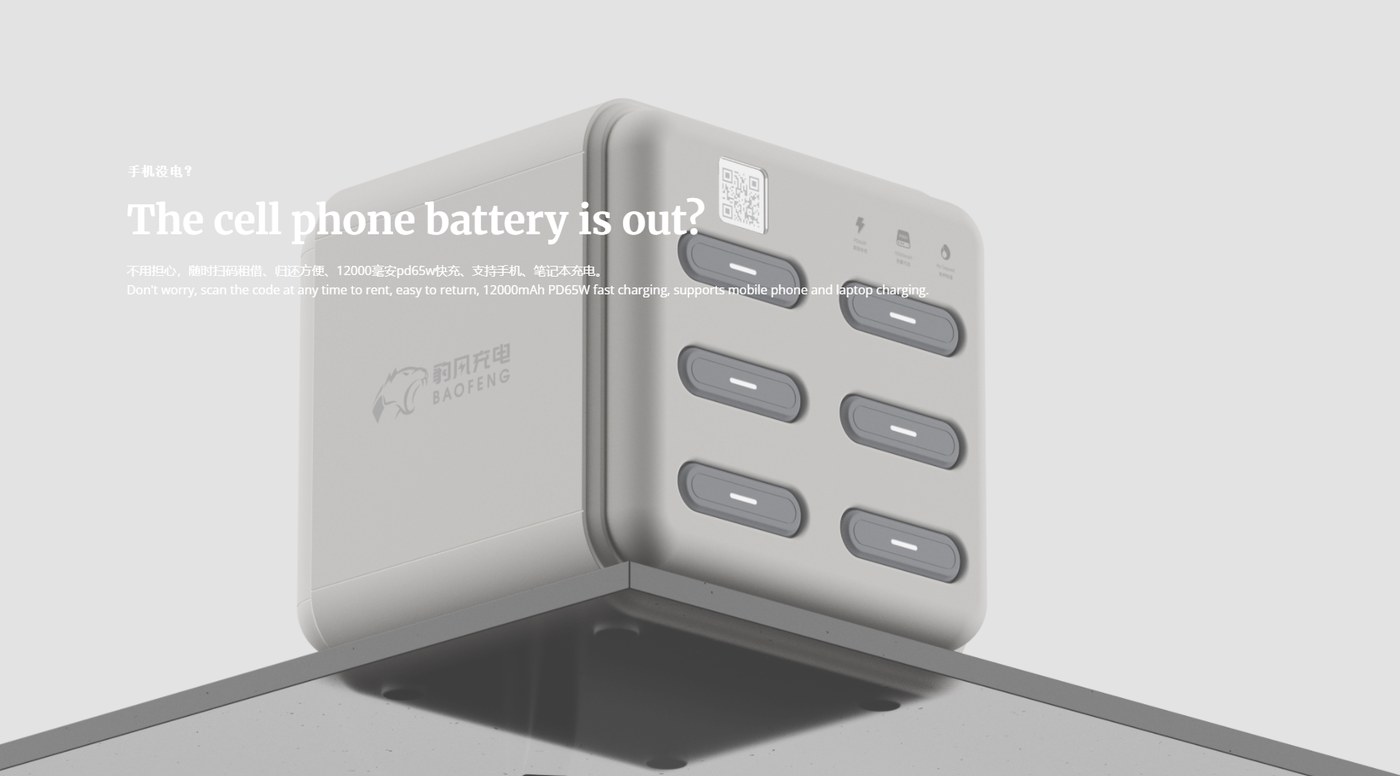
What Actually Breaks an Overseas Power Bank Business
We have watched too many would-be exporters fail at the last mile:
- The container arrives at port and fails certification.
- The machines go live and users cannot pay.
- Three months in, the hardware is corroded by sea air.
- 100 units are deployed and the backend cannot keep up.
None of those problems should be the operator’s job to solve. So our product philosophy reduces to one sentence: fill every pitfall before the machine leaves the factory.
Step 1 — Certification first
Every cabinet ships with the certification set already in place: Indonesia’s SDPPI for telecom equipment, plus CE, FCC, RoHS and 3C. Operators do not need to re-apply for anything after purchase. Because Southeast Asian markets differ, Baofeng Charge configures the certification package to match the destination country so hardware does not get stuck in customs.
Step 2 — Payment rails built in
GoPay, OVO, DANA, ShopeePay and QRIS are integrated at the factory. The cabinet supports every major Indonesian e-wallet from the moment it powers on. For an operator, that means no separate payment integration project and no risk of a broken settlement chain.
Step 3 — Climate engineering
An IP54-rated battery compartment, moisture-resistant coating on the Type-C connectors, and a UV-resistant engineering-plastic housing. None of this matters in a temperate market. On the equator, it is the difference between a one-year asset and a three-month consumable. Our cabinets go through high-temperature, high-humidity ageing tests before they ship.
Step 4 — A trilingual SaaS backend
The backend natively supports Chinese, English and Indonesian, so a local team hired in Jakarta is productive from day one. It covers device management, order settlement, revenue-share configuration and fault alerts — one system that scales from 10 cabinets to 1,000.
Step 5 — SOPs shipped with the hardware
Site selection criteria, deployment cadence, public-holiday forecasting, and a “pitfall handbook” — all compiled from real feedback across our global customer base and delivered alongside the hardware. Operators do not have to figure it out alone.
This is not a product spec sheet. It is a promise: you are not buying a cabinet, you are buying a zero-friction market-entry toolkit.
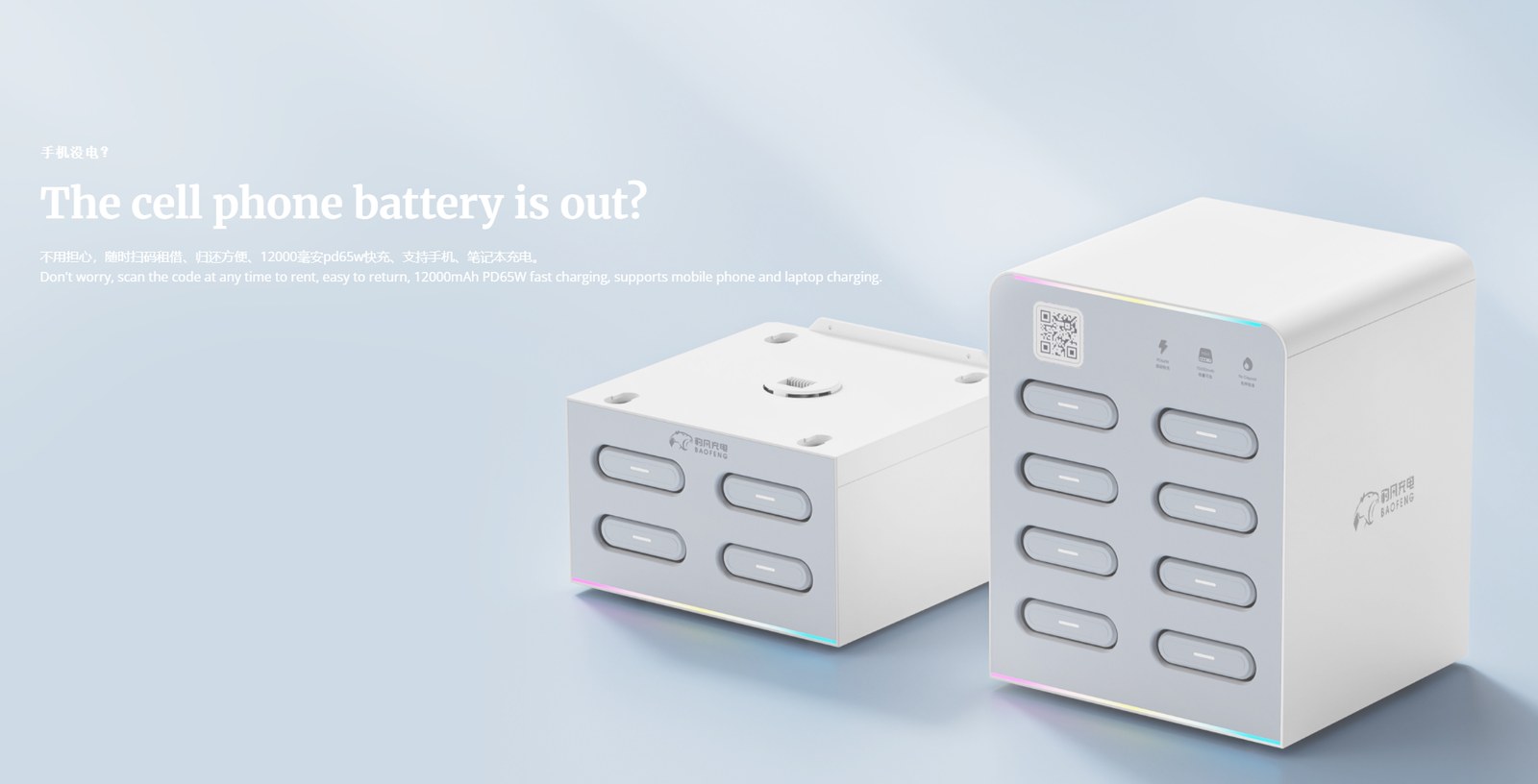
What the Jakarta Deployment Looks Like a Year Later
Our Indonesian customer has now been running Baofeng Charge hardware for over a year. The photos and messages they send back tell a consistent story:
- Office workers in Jakarta’s Sudirman corridor renting a power bank over lunch break.
- Tourists at a Kuta Beach convenience store scanning under the midday sun.
- Business travellers in a Surabaya hotel lobby returning a unit while checking out.
- Students leaving a university library in Bandung with a power bank in hand.
Behind every one of those moments, the cabinet is doing the same job: making a dead phone battery a non-issue.
Our team has never visited most of these places. The photos arrive by email and WhatsApp in a Shenzhen office. But in every photo, the Baofeng Charge logo is lit up on the screen. That is what going global actually looks like — you do not need to get on a plane, you need to build a product good enough to travel on its own.
The Real Market: Southeast Asia Has 670 Million People and Under 10% Penetration
Indonesia is really a proxy for the whole region.
Southeast Asia has approximately 670 million people, and shared power bank penetration is still under 10%. Compare that with China, where location coverage exceeds 95%. That gap represents a five to eight times growth runway.
Industry research points the same way. Mordor Intelligence tracks sustained expansion in the global battery-sharing and portable charging market, with emerging markets contributing the fastest incremental growth. That conclusion is echoed in reports from Coherent Market Insights, Spherical Insights and DataIntelo.
Meanwhile, the expansion playbook of European operators such as HeyCharge makes the same point from the operator side: competition in power bank sharing has shifted from “do you have hardware” to “can you deliver reliable hardware, a mature backend and genuine localisation.” That is precisely where Chinese full-machine manufacturers have an edge.
Four Commitments Baofeng Charge Makes to Overseas Operators
We will not promise that a business will make money — nobody can guarantee that for you. What we can commit to is this:
- Product quality. Every cabinet you receive is a global-spec unit that passed 23 factory tests, not repurposed domestic inventory.
- Responsiveness. Software and order issues are diagnosed remotely 24/7; hardware issues are supported with international logistics reaching Jakarta within 48 hours.
- Continuous iteration. The SaaS backend is upgraded free for life, and a new hardware revision ships every year.
- Brand backing. When your users scan to rent, the Baofeng Charge name on the screen stands for Shenzhen-built quality — quiet credibility working for your business.
FAQ: Shared Power Banks in Indonesia
What certifications do I need to deploy shared power banks in Indonesia?
The main requirements involve Indonesia’s SDPPI telecom equipment certification, EMC and safety compliance, and battery transport documentation such as UN38.3 and MSDS. Baofeng Charge ships cabinets with SDPPI, CE, FCC, RoHS and 3C already in place, which shortens customs clearance and time-to-launch considerably. For other Southeast Asian destinations, we reconfigure the certification list to match local rules.
How are payments handled?
Every cabinet ships with GoPay, OVO, DANA, ShopeePay and QRIS built in. Operators only need to activate their merchant accounts — there is no separate payment integration project.
How long does payback take?
Payback depends on location quality, local pricing and rental frequency. We recommend validating a single-site model first, then rolling out at a disciplined cadence using the SOPs. Baofeng Charge provides site-selection and rollout guidance, but makes no profit guarantees.
What happens if hardware fails?
Software and order issues are handled through 24/7 remote diagnostics. The hardware is modular by design, so most faults are resolved by swapping a module locally; major hardware issues are supported through international logistics.
Final Thoughts
A cabinet leaves a Shenzhen factory, goes into a crate, crosses an ocean, and gets rented at the entrance of a Jakarta mall. It is a small moment. But behind that moment is a decade of accumulated product capability, validated by a stranger on the other side of the world tapping “rent a power bank.”
Baofeng Charge does not intend to be the biggest brand. We intend to be the most trusted partner for going overseas. Indonesia is only the first stop — Vietnam, Thailand, Malaysia and the Philippines are next, and the whole of Southeast Asia is waiting for the same hardware, backend and SOPs.
If you are planning a shared power bank deployment in Indonesia, or anywhere across Southeast Asia, Latin America, the Middle East or Africa, visit the Baofeng Charge website to review our products and full-chain solutions, or email us directly at customerservice@baofengcharge.com. You may also want to read our complete guide to Southeast Asia shared power bank qualifications as a first step in assessing market-entry requirements.
Charge Anywhere, Anytime.