
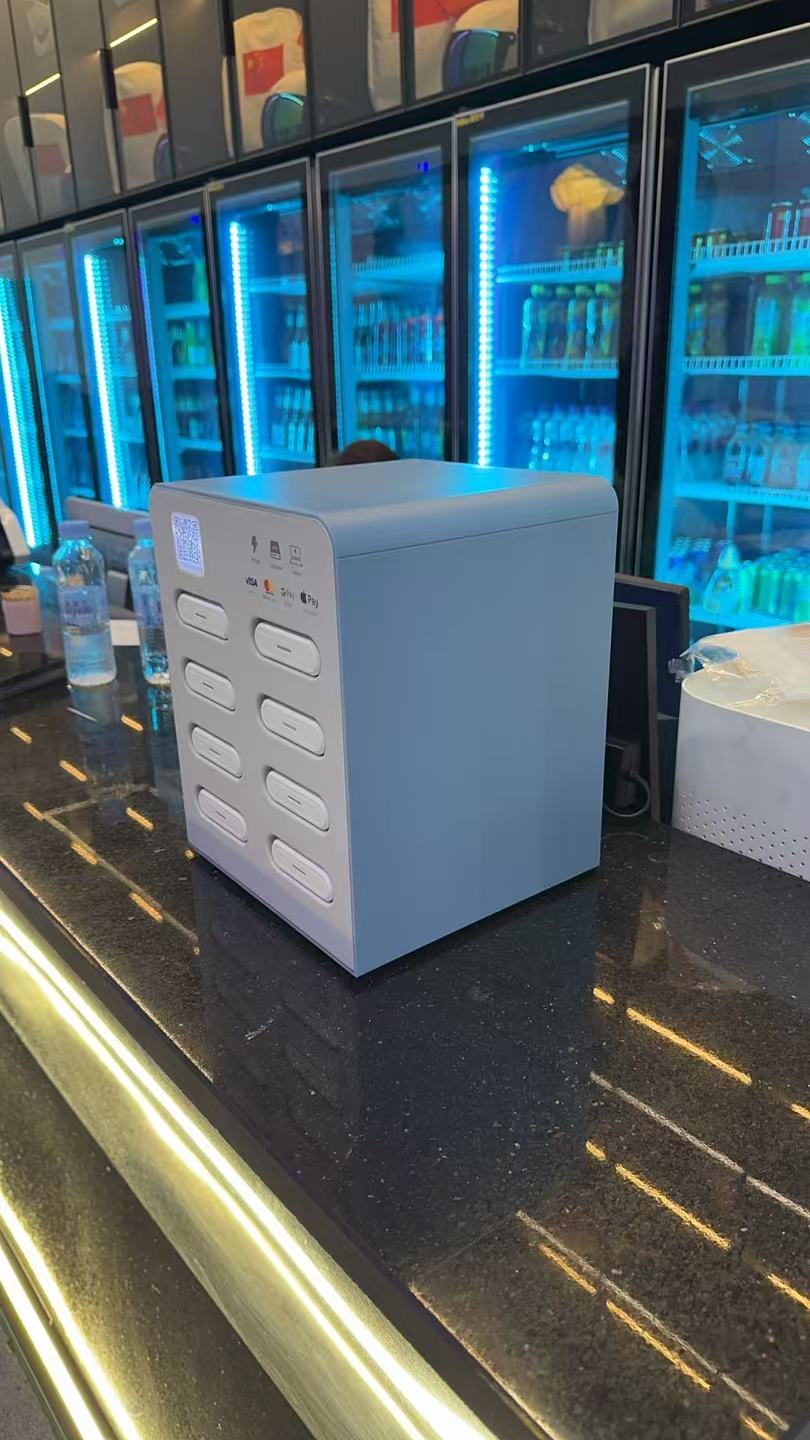
Baofeng Charge (www.baofengcharge.com) has officially launched its shared power bank solution in Myanmar. First-batch cabinets are already operating in Yangon’s busiest commercial districts — inside shopping malls, restaurants, teahouses, and business hotels. This launch is more than a geographic expansion; it is a complete field validation of the Chinese shared power bank model in a Southeast Asian emerging market. In a country where mobile phones are essential but grid power remains unstable, shared charging is not a nice-to-have — it is genuine, high-frequency consumer infrastructure.
Why Myanmar? A Mobile-First Market That Is Still Underestimated
Myanmar has a population of roughly 54 million and more than 63 million active mobile connections — a mobile penetration rate of about 116 percent of the population, according to the DataReportal Digital 2025: Myanmar report. Behind that number is a way of life in which the mobile phone is everything: socialising, shopping, transferring money and entertainment all happen on a single screen. Desktop internet is essentially irrelevant for the average user.
At the same time, Myanmar’s power grid remains unreliable. Outages in commercial districts of Yangon and other cities are routine, not exceptional. For an ordinary user, “my phone is dead” is not an occasional inconvenience but a recurring anxiety. For delivery riders, small shop owners, students and office workers, battery level is directly tied to income and to whether the day goes smoothly. The combination of “extreme mobile-dependence plus unstable supply of electricity” creates demand for shared charging that is even more urgent than in mature markets.
Payment-side changes have accelerated this. In 2025 the Central Bank of Myanmar rolled out MMQR, the country’s unified national QR standard. Combined mobile wallets such as KBZPay and Wave Money now reach close to half of Myanmar’s adult population, and scan-to-pay is becoming the default behaviour for urban consumers. That mass adoption of QR payments removes the single biggest barrier to self-service rentals: most users already know how to scan a code to start a transaction, so they need no extra education to start renting a power bank.
From Product to Operations: Baofeng’s Localisation Stack
Payment integrations built for a multi-wallet market
Baofeng engineered deep payment integrations for the Myanmar market. Users can scan and pay through KBZPay, Wave Pay or any MMQR-compatible wallet, while a cash fallback option remains available for users who have not yet adopted mobile wallets. For venue partners this means every customer can complete a transaction cleanly, regardless of which wallet they prefer — no revenue lost to fragmented payment methods.
Burmese-language user interface and multi-language operator backend
Baofeng delivers a fully localised Burmese user interface. Every prompt in the rental flow, every pricing explanation and every customer-service entry point is presented in Burmese, removing the cognitive friction of first-time use. The merchant operator backend is also available in Burmese and supports multi-currency settlement, so the local team can run pricing, device management and revenue reporting without depending on Chinese-speaking engineers.
Hardware tuned for tropical heat and monsoon humidity
Myanmar’s year-round heat and humidity stress electronics in ways that temperate markets never see. Baofeng designed its cabinets for a wide operating temperature range with moisture-resistant and dust-resistant enclosures, and the power banks themselves use flame-retardant shells with multilayer circuit protection. This is what converts “lab-rated reliability” into “street-tested uptime” — the difference between a device that performs at a trade show and one that performs across a Yangon monsoon.
Scene-First Deployment: How Yangon’s Commercial Districts Are Wired
The first batch of cabinets concentrates on the three location types with the highest foot traffic in Yangon:
- Shopping malls and department stores — family groups with long dwell times, where rental frequency is highest.
- Restaurants and teahouses — teahouses are a uniquely Burmese social and commercial hub. Business meetings, friend gatherings and informal commerce can run for hours, which naturally produces charging demand.
- Hotels and transport hubs — serving business travellers and transit passengers who are the most sensitive to “rent anywhere, return anywhere” convenience.
First-month operating data from the Yangon sites shows stable daily rental counts per cabinet, with pronounced evening peaks and weekend surges — a usage curve consistent with what Baofeng has observed in other Southeast Asian emerging markets. For venue partners the cabinets deliver more than direct rental revenue: they give customers a reason to stay a little longer, and a customer whose phone is charged is a customer who stays.
From the Operator’s Seat: An Asset Model That Local Merchants Actually Prefer
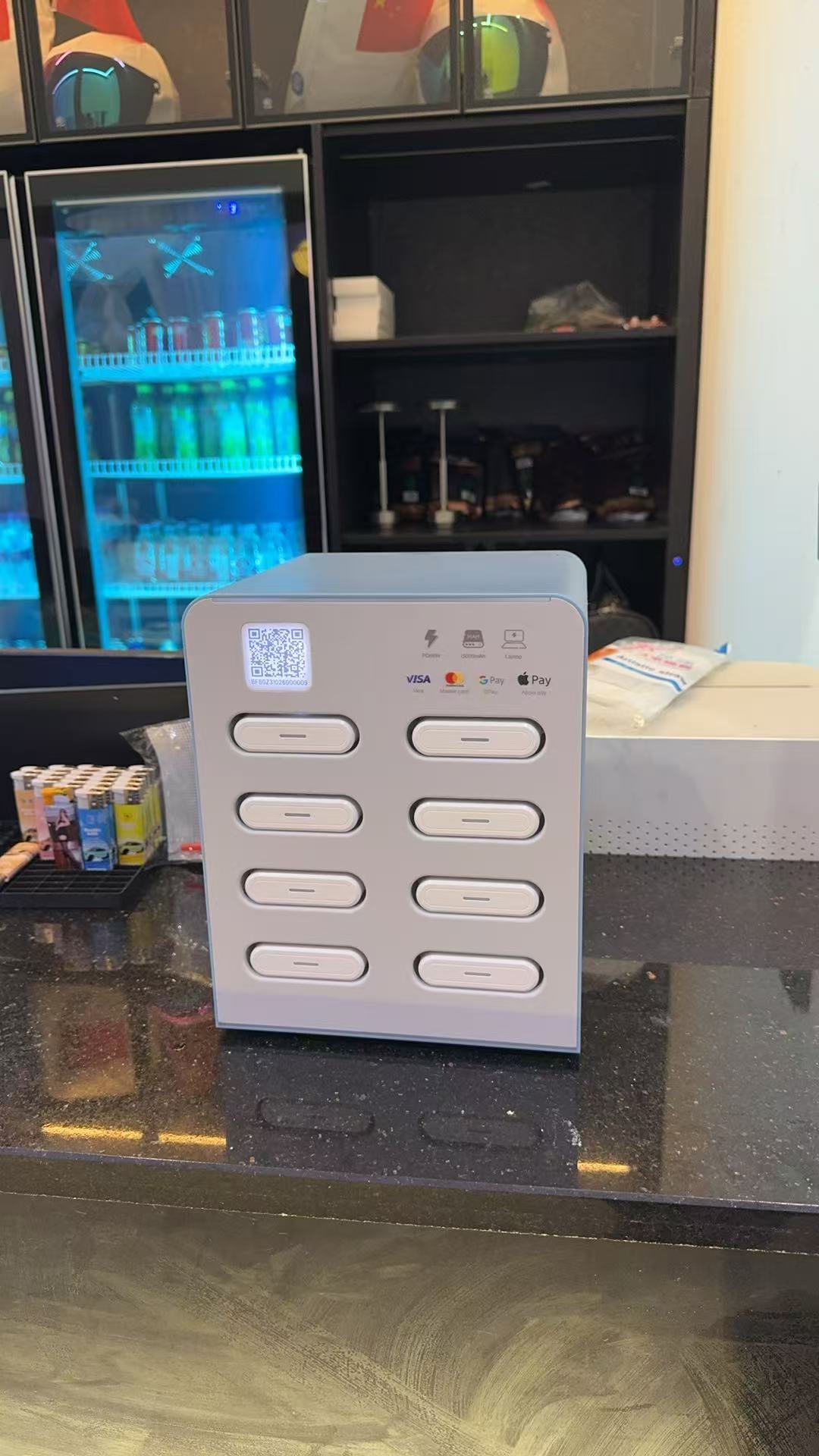
Unlike platforms that take aggressive revenue share, Baofeng continues its “merchant-buys-the-hardware, merchant-keeps-the-revenue” model in Myanmar. Local merchants or entrepreneurs buy the cabinets outright, then set their own rental prices and rules through the operator dashboard. Every unit of revenue stays with the venue partner.
This model has particular resonance in Myanmar, where the local commercial credit system is still maturing. Merchants prefer an asset-style business that they can see, touch and control rather than handing the keys to a foreign platform. A shop owner in Yangon can buy a cabinet for a one-time outlay, choose its location, set its own pricing, and own the resulting revenue stream indefinitely — a financial structure that aligns better with local norms than recurring platform fees of the kind familiar from ride-hailing or food-delivery apps. For an analysis of how this same model has performed in a neighbouring market, see Baofeng Charge in Indonesia: localisation playbook for Southeast Asia. Myanmar and Indonesia share similar user behaviour and climate conditions, so a playbook that worked in Jakarta can be replicated at low marginal cost in Yangon.
What Myanmar Signals for Southeast Asia
Globally, shared power banks are diffusing out of China into Southeast Asia, the Middle East and Latin America. Industry analysts from Mordor Intelligence, Spherical Insights and DataIntelo consistently identify rising mobile-device dependence and the spread of sharing-economy models as the two structural drivers of growth in this category. Markets such as Myanmar — those that skipped the credit-card era and went straight to mobile wallets — are precisely the highest-leverage entry points for shared charging.
For Baofeng, the Myanmar launch is more than one more pin on the map. It validates the company’s full stack — hardware, payments and localised operations — under the specific constraints of low banking penetration, multiple coexisting wallets and a tropical climate. That proven combination is repeatable across the rest of Southeast Asia, with end-to-end support ranging from hardware supply to system deployment to operator training. For the wider global picture, see Baofeng Charge’s global rollout across 25 countries.
Frequently Asked Questions About Shared Power Banks in Myanmar
Is Myanmar a good market for a shared power bank business?
Yes. Three structural drivers converge: mobile penetration above 100 percent of the population, an unreliable grid that turns battery anxiety into a daily concern, and mass-market adoption of MMQR scan-to-pay. Combined, they produce a rental frequency profile comparable to other top-performing Southeast Asian emerging markets.
Which payment methods do Baofeng cabinets accept in Myanmar?
Baofeng cabinets accept KBZPay, Wave Pay and any MMQR-compatible mobile wallet, with a cash fallback channel for users who have not yet adopted wallets. This coverage reaches the overwhelming majority of Myanmar’s active urban consumers.
Do the cabinets work in Yangon’s monsoon climate?
Yes. Cabinets are rated for wide temperature ranges with moisture and dust resistance, and the power banks themselves use flame-retardant shells and multi-layer protection circuits — explicitly designed for hot, humid, high-rainfall operating environments.
How does Baofeng’s operator model work in Myanmar?
Local merchants or investors buy the cabinets outright. They set rental prices and rules through the merchant backend, and they keep the rental revenue. Baofeng provides hardware, software, payment integrations and Burmese localisation, but does not take a platform-level share.
Can the Myanmar model be replicated in other Southeast Asian markets?
Yes. The combination of low banking penetration, multi-wallet coexistence and tropical climate that Baofeng validated in Myanmar applies across most of mainland Southeast Asia. Partners in adjacent markets can adopt the stack with limited additional localisation effort. The reusable components include the multi-wallet payment gateway, the Burmese-class localisation framework (extensible to Khmer, Lao, Vietnamese and Thai), the wide-temperature cabinet design, and the operator-self-service backend. What changes market by market is the specific wallet mix and the language of the user interface.
What kind of operator support does Baofeng provide after launch?
Baofeng offers end-to-end operator support: hardware supply and shipping, on-site or remote installation guidance, payment-gateway onboarding, Burmese-language UI configuration, and ongoing technical support. Partner training covers day-to-day operations such as inventory replenishment, dynamic pricing and revenue reconciliation through the merchant backend.
Conclusion: Taking a Proven Chinese Model Where It Is Needed Most
Shared power banks are a thoroughly proven category in China. In Myanmar the category is only beginning to answer the question: how does a mobile-first life get to stop being defined by battery percentage? Baofeng’s Myanmar launch succeeds not by lifting the China playbook as-is, but by carefully adapting it to local payments, local language and local climate.
For merchants, distributors or entrepreneurs in Myanmar or other Southeast Asian markets who are exploring shared power bank opportunities, visit the Baofeng Charge official website or email customerservice@baofengcharge.com. The overseas business team provides tailor-made deployment plans, hardware supply, software onboarding and operator training.