
From China’s Red Ocean to the Global Blue Ocean: A Strategic Shift
Shared power banks have emerged as one of the most viable business models in China’s sharing economy, proving their lasting profitability and commercial value through intense domestic competition, sustaining an industry worth billions in annual revenue. According to Coherent Market Insights research, the global shared power bank market is projected to grow from USD 1.80 billion in 2026 to USD 4.94 billion by 2033. As the domestic market stabilizes and growth curves flatten, the vast overseas market has become the inevitable choice for companies seeking their second growth curve.
However, expanding overseas is far from a simple copy-and-paste exercise. The complexity and diversity of international markets demand far more from entrants. This article provides a systematic analysis of the shared power bank overseas market development landscape and, drawing on the practical experience of industry leader BaoFeng Charging, offers a strategic roadmap for brands and investors looking to enter global markets. Learn more about BaoFeng Charging
Chapter 1: Overseas Market Landscape – Opportunities and Challenges Coexist
1.1 Market Opportunities: Vast Potential, Proven Model Transferability
Overseas markets offer larger population bases, richer consumption scenarios, and more widespread smartphone dependency than China. As HeyCharge’s global market analysis indicates, developed regions like Europe, Japan, South Korea, and the Middle East exhibit strong user willingness to pay and rigid demand for convenient services. In emerging markets like Southeast Asia and Latin America, mobile internet adoption is accelerating while charging infrastructure remains underdeveloped, creating natural growth space for shared charging services.
China’s proven “scan-to-borrow, pay-per-use, scenario-penetration” business model possesses strong transferability and adaptability, providing a solid logical foundation for overseas expansion. Read our previous in-depth overseas market analysis
1.2 Core Challenges: High Fragmentation Demands Localization
Unlike China’s unified domestic market, overseas markets are a collection of countless independent markets characterized by “high fragmentation,” as confirmed by LinkedIn’s Europe market analysis:
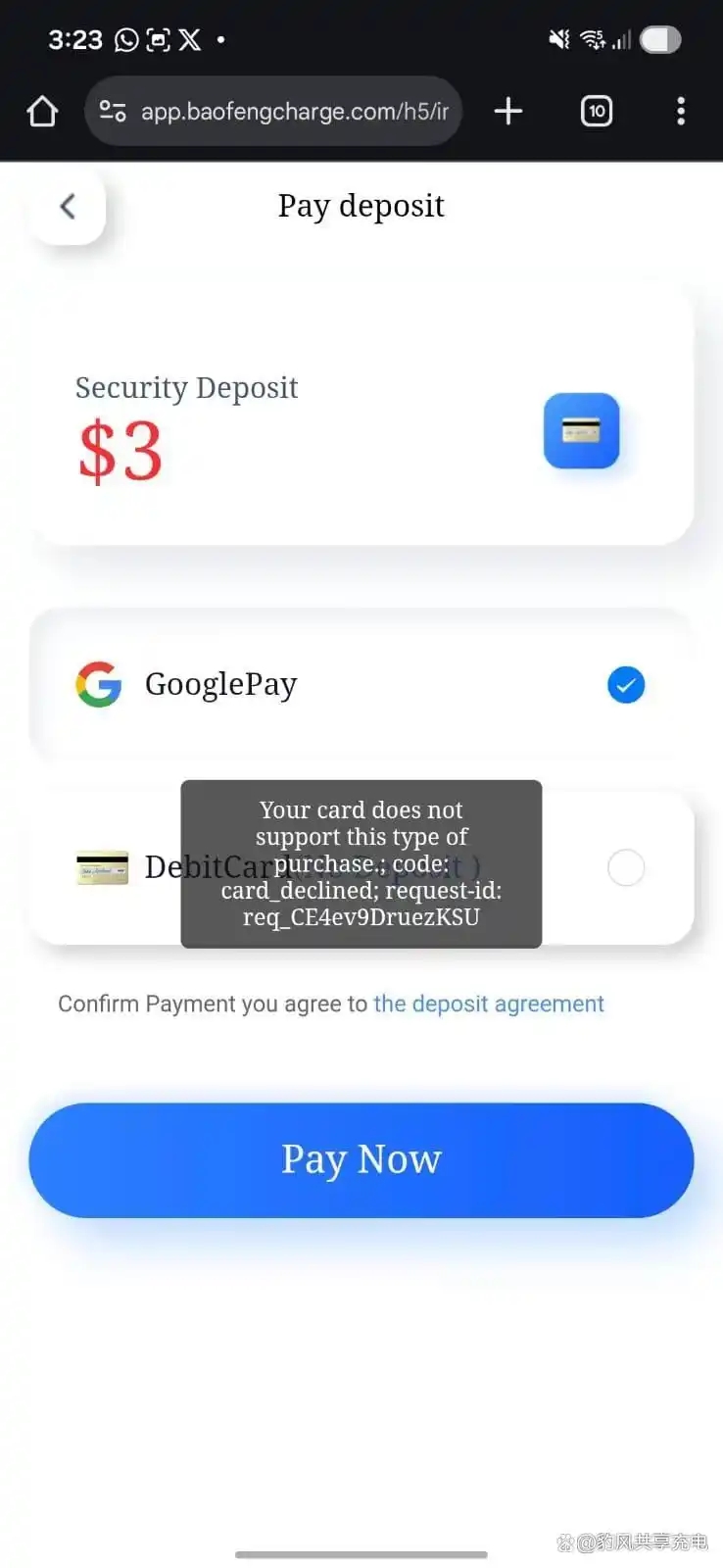
- Fragmented Payment Methods: Europe relies on credit cards and local e-payments; the Middle East requires integration with local card networks like MADA; Southeast Asia is dominated by dozens of e-wallets such as GrabPay, MoMo, and OVO; and North America features a mix of credit cards and digital wallets.
- Divergent User Habits: European users prefer short-term emergency charging, North American users have high expectations for product design and brand experience, while some Asian and Middle Eastern markets are highly price-sensitive with different usage duration patterns.
- Varying Compliance Thresholds: Data privacy (e.g., EU GDPR), electronic device safety certifications (CE, FCC, PSE), consumer protection laws, and commercial regulations differ across countries.
- Infrastructure and Communication Differences: Network standards, operator policies (e.g., eSIM adoption rates), electrical standards all require hardware customization.
The reality is that there is no universal solution globally – deep localization at country or even city level is essential. BaoFeng Charging‘s differentiated practices across Europe, the Middle East, Southeast Asia, and North America directly address these challenges.
Chapter 2: The “Golden Rule” for Market Entry – Focus on High-Value Regions
Based on BaoFeng’s practical experience building from zero to one across multiple overseas markets, blindly expanding at this stage is not advisable. The correct entry strategy follows the principle of “focus first, expand later,” prioritizing “value highlands” with:
Criterion One: Higher Economic Development and Consumption Level
Target markets should demonstrate strong resident spending capacity and non-cash payment habits. As DataIntelo’s research indicates, higher per-order values and willingness-to-pay are key to achieving healthy cash flow quickly. This typically means prioritizing developed economies with higher GDP per capita or regions concentrated with high-net-worth populations: Western Europe, Gulf states, North America, Australia/New Zealand, and select East Asian developed nations.
Criterion Two: Stable Political and Business Environment
A stable social environment, clear laws and regulations, efficient administrative processes, and openness to business activities form the foundational guarantee for long-term investment and operations. A stable environment means lower policy risk, strong property rights protection, smooth dispute resolution mechanisms, and significantly reduced non-operational risks for overseas enterprises.
Criterion Three: Ability to Establish or Effectively Manage Local Operations Teams
Shared power banks represent a typical “heavy offline operations” business model. Equipment deployment, maintenance, battery replenishment, customer service – all require powerful ground execution capabilities. Therefore, target markets must meet at least one of these conditions:
- Able to build an in-house local team: Possess legal, convenient channels to recruit and manage local employees, establishing direct sales operations, marketing, and ground teams for maximum execution efficiency and cultural control.
- Able to deeply manage quality partners: Find locally aligned, resource-complementary, and capable partners (agents, franchisees) locally, then achieve effective management of their operational quality and standards through technology systems, standardized processes, and robust management tools (smart backends, data dashboards) – avoiding “connection without control.”
Core strategy: Abandon illusions of “casting a wide net.” Concentrate superior resources on “seed markets” meeting all three criteria above for saturation investment, creating benchmark cases. Only by going deep in one or a few markets – establishing replicable success models and strong localization capabilities – can you accumulate momentum and experience for subsequent expansion into broader, more complex markets. Visit BaoFeng Charge homepage
Chapter 3: Four Tactical Pathways for Precision Entry
After selecting target value markets, enterprises need four tactical pathways to achieve stable entry from zero to one:
Pathway One: Deep Product and Technology Localization Adaptation
Hardware: Equipment must pass mandatory local certifications and adapt charging protocols, network modules (e.g., eSIM support), appearance design, and even extreme climate durability.
Software: App/mini-program interfaces, interaction logic, payment flows, and customer service systems must fully align with local user habits. Pricing strategies and marketing campaigns (holiday promotions) also need localized design.
Pathway Two: Payment and Channel “Ice-Breaking” First
Make “enabling payments” the top priority for market launch. Proactively engage local mainstream payment gateways, banks, card networks, and e-wallet providers to ensure smooth user payment experiences with reasonable rates and settlement cycles. This is the “final kick” for closing the commercial loop.
Pathway Three: Adopt a “Pilot City” Strategy
Avoid nationwide simultaneous rollout within a country. Prioritize 1-2 core cities (such as the capital, largest economic center, or key tourism city) for piloting. Focus resources on high-density, high-quality deployment in landmark scenarios such as core business districts, transportation hubs, and popular attractions to rapidly validate the business model, collect user data, optimize operations, and build regional brand awareness and market barriers.
Pathway Four: Build a Data-Driven Precision Operations System
From day one, rely on intelligent backend systems for real-time monitoring and data analysis of equipment online rates, utilization rates, revenue, and fault types. Make data-driven decisions to optimize network layout, adjust pricing strategies, predict battery replacement cycles, and precisely target marketing resources, continuously improving per-location profitability and operational efficiency while reducing maintenance costs. Spherical Insights reports also emphasize that data-driven precision operations are critical for profitability improvement.
Conclusion: Start with Focus, Succeed Through Deep Cultivation
The overseas journey of shared power banks is a marathon of patience, professionalism, and local wisdom. The current market landscape features intertwined opportunities and challenges, and any successful entry must be strategic and systematic rather than opportunistic gold-seeking.
BaoFeng Charging’s experience teaches us that the optimal entry path is: prioritize “value markets” with high consumption levels, stable environments, and the ability to establish strong local operational footholds. Through deep localization of products, payments, and operations, refine the model, develop the team, and take root in a relatively friendly “testing ground.”
Only then can companies not merely “enter” markets but truly “take root,” ultimately building sustainable competitive barriers and long-term value across the vast global blue ocean. For latecomers, this focused, deep-cultivation path may be the wiser choice with controllable risks and higher success rates. For more information, feel free to contact us.