
In 2026, shipments of Baofeng Charge shared power bank equipment began arriving in South Africa, delivered to local merchants and independent operators. Let us be direct about what we do: we do not run stations ourselves, and we do not station a team in the country. We sell equipment — plus the software, payment rails and cross-border logistics that let that equipment start earning on the day it is installed. South African buyers take the cabinets and power banks, place them in their own malls, restaurants, fuel stations and guesthouses, set their own prices, and keep one hundred percent of the revenue.
Our job is narrower than it sounds: package a business that works out of the box, and put it in the customer’s hands. This guide unpacks every layer of a shared power bank South Africa deployment — hardware selection, software, payment rails, freight, and the teams behind each one.
Why South Africa Is a Structural Market, Not a Trend
South Africa is the second-largest economy in Africa with smartphone penetration above 60%, yet its grid has been unstable for most of the past decade. State utility Eskom’s load shedding schedule has reached Stage 6, with four to six hours of outages a day once routine. In that environment a phone is not just a phone — it is the flashlight, the payment terminal and the map — and the wall socket cannot be trusted.
That changes the category. Shared power bank rental in South Africa is not a nice-to-have amenity bolted onto a café; it behaves like urban infrastructure. Layer on the country’s tourism, conference and sports economy — malls, airports, bars, stadiums, festivals, all high-footfall, long-dwell, battery-hungry — and the economics get unusually favourable. Local customers already understand the behaviour: they scan, they borrow, they return. What has been missing is reliable hardware and a system that a local operator can actually run.
Globally, the shared power bank market keeps expanding, and growth rates in emerging markets run well ahead of mature ones. Africa is in the zero-to-one window.
Hardware Re-Engineered for South African Conditions
The units we ship are not domestic models with a different plug. Shenzhen engineers re-developed them around three local constraints: climate, crime and power cuts.
Power banks built for daily abuse
Each unit carries built-in Type-C, Lightning and Micro-USB cables, a 10,000mAh automotive-grade cell, and cycle-life and safety margins above the industry baseline. They meet UN38.3 and IEC62133 transport and safety requirements — the paperwork that makes a lithium shipment legal.
Two cabinet form factors, one back end
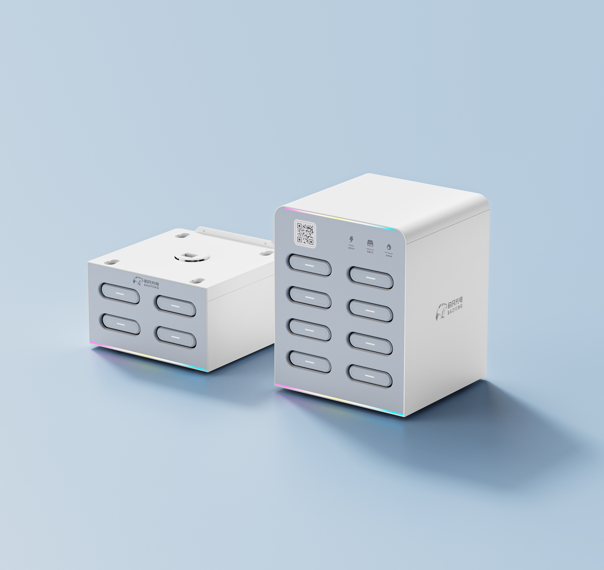
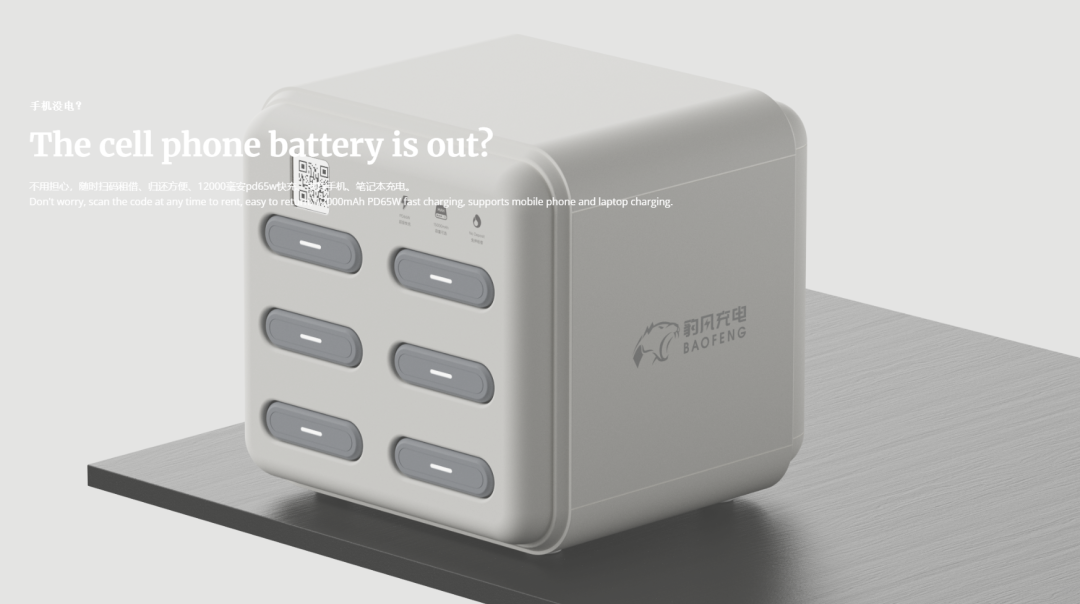
Desktop 4-slot and 8-slot cabinets suit restaurants, cafés and cashier counters. Floor-standing 24-slot and 48-slot cabinets suit mall atriums, airport lounges and fuel station convenience stores. Buyers size by footfall per site; every cabinet reports into the same dashboard.
Anti-theft by design
Given South Africa’s theft profile, the cabinet uses high-strength sheet metal with anti-pry latch geometry. Any abnormal door opening triggers an alarm, and tilt and vibration sensors notify the operator’s administrator the moment a unit is levered or carried off. Each power bank supports dual-mode GPS and Bluetooth positioning, so a removed unit can still be traced.
IP54, wide temperature, and back-up power
The enclosure is rated IP54 for dust and water resistance and runs across a wide operating temperature band, covering humid coastal air and inland high-sun heat. The most locally significant feature, though, is the internal back-up battery and supercapacitor: when mains power drops, the cabinet can still complete a borrow, a return and a billing event. In a country where load shedding is routine, “service during outage” is the difference between a viable business and an expensive ornament.
Software: Four Layers, Delivered With the Hardware
Hardware is the door. Software decides whether the operator makes money. The stack was built in-house by our Xi’an team and ships with the equipment; the accounts belong to the customer.
Consumer layer
A lightweight web app plus Android and iOS apps, with an optional WeChat mini-program for Chinese-speaking tourists. Interface languages include English, Afrikaans and Zulu. Scan, borrow, return — no app-store friction required.
Device layer
4G Cat.1 with Bluetooth as a second channel. Remote OTA updates, offline order caching with resume after reconnection, and real-time reporting of heartbeat, bay temperature, battery level and door state.
Merchant layer
Every site owner sees their own revenue, borrow counts, inventory and fault tickets, with an auditable revenue-share ledger. If an operator wants to distribute fifty sites across fifty small merchants, the system splits revenue automatically by configured ratio.
Operations layer
Map-based site management, lost-unit risk control, time-of-day dynamic pricing and multi-currency financial reporting. The operator’s Johannesburg office and their head office abroad look at the same numbers. Training, manuals and configuration guidance are included; a competent technician is typically live on pricing and reconciliation within two to three days.
Payments: Local Rails, Opened Before the Container Arrives
Payments are where cross-border rental businesses usually stall — and it is the one layer most equipment vendors leave the buyer to solve alone. Baofeng Charge’s Hong Kong company handles it: merchant account applications with South African acquirers and international card schemes, technical integration, and joint testing, completed before the goods clear port.
The local mix is fully covered: card pre-authorisation holds for deposits (Visa and Mastercard, including 3D Secure), instant bank transfer via Ozow, local acquiring through PayFast, QR payments via SnapScan and Zapper, plus Apple Pay, Samsung Pay and Google Pay. Users without a bank account can prepay with rental vouchers or pay at the counter, which brings the cash economy into the funnel instead of excluding it.
Funds settle directly to the customer’s own account. Baofeng Charge never touches client cash flow. What the Hong Kong team provides is rail access and compliance support: multi-currency settlement structures, PCI DSS guidance, pre-authorisation and refund dispute procedures, and cross-border settlement of the equipment purchase itself in rand, US dollars or renminbi.
Logistics: Lithium Batteries, Door to Door
The hardest part of exporting shared power banks is rarely the sale — it is the shipping. Lithium cells fall under Class 9 dangerous goods. Air freight requires UN38.3 test reports and an MSDS; sea freight requires dangerous goods declaration. One missing document and the container sits in port while the customer misses their opening date.
We ship door to door. First leg is either consolidated air freight (seven to ten days) or full-container sea freight (thirty to thirty-five days) out of Shenzhen, Guangzhou or Ningbo. Customs clearance is handled end to end by partner brokers, including NRCS and SABS certification guidance, ICASA type approval for radio-equipped cabinets, SARS tax compliance and HS classification. On arrival, goods are delivered to the address the customer specifies — Johannesburg, Cape Town and Durban are all direct.
Installation does not require us on site. Cabinets ship fully assembled and run on mains power; we supply a site survey checklist, installation video and remote commissioning support, and the customer’s electrician follows the drawings. For spares, buyers can pre-purchase power banks, door modules and 4G modules at a set ratio, which — combined with dashboard fault alerts — is enough to sustain local self-maintenance. Operators planning dense retail and hospitality rollouts often benchmark their site economics against published charging infrastructure operating practice before committing to a footprint.
Three Ways Buyers Run the Business
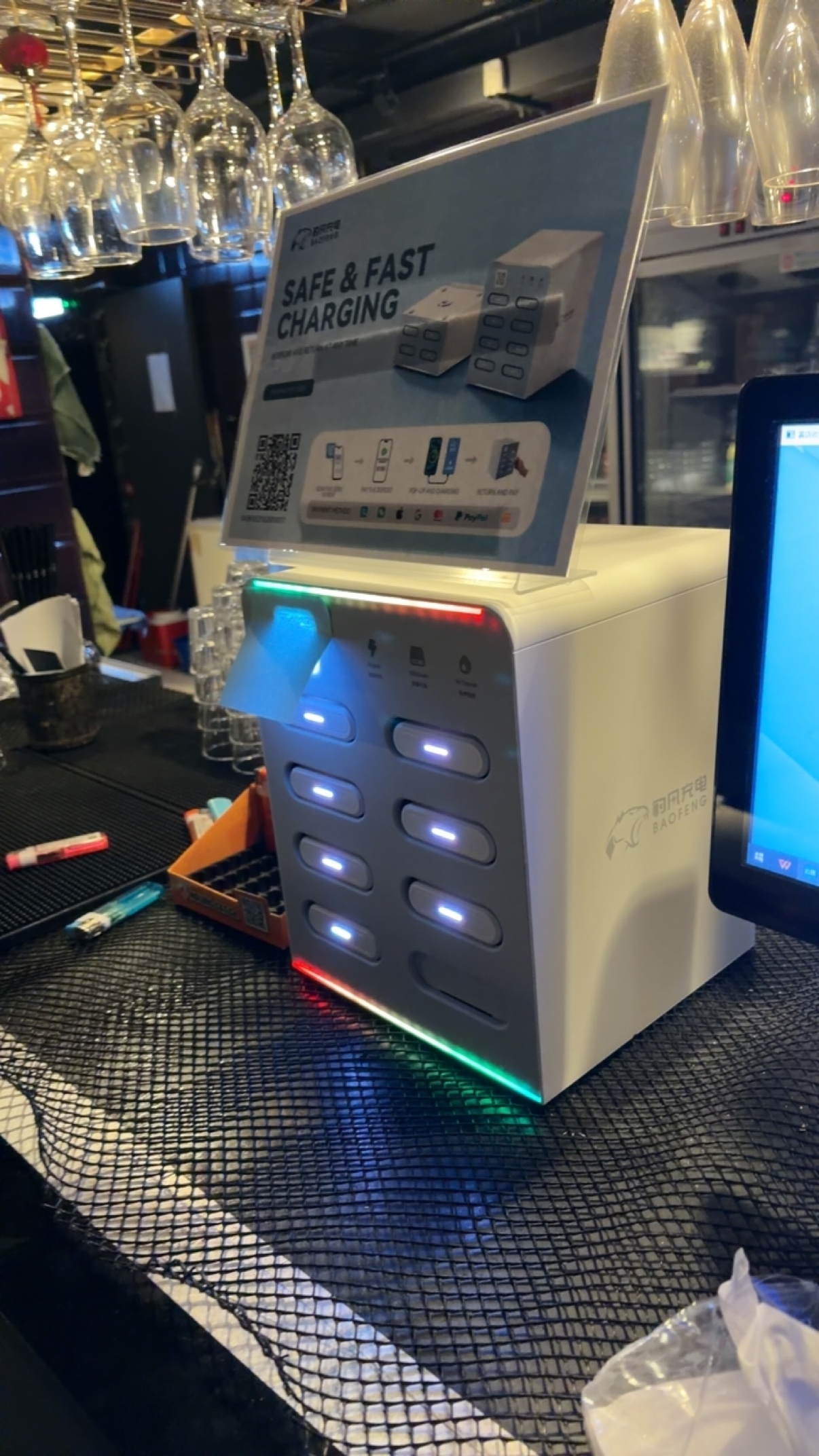
Direct site operation is the most common. The buyer places cabinets in their own malls, restaurants, fuel stations and guesthouses, keeps all revenue, proves the model on three to five sites, then replicates.
Regional distribution suits buyers who already hold merchant relationships. They resell or lease equipment to sub-sites and take an automatic cut through the revenue-share engine. The system supports multi-level accounts, so a sub-merchant only ever sees their own data.
Private label and OEM is for buyers who want to appear under their own brand: body silk-screen printing, boot animation, app skinning and back-end branding are all configurable.
In every model, equipment ownership, data ownership and revenue stay with the customer. Baofeng Charge supplies capability and does not compete with the operator on their own turf. For the localisation details of the current South African build, see our earlier report on how Baofeng Charge adapted shared power bank hardware for a hot-climate market.
Who We Are: Three Companies, Three Specialisms
The package is only credible because each layer is owned by a dedicated team rather than subcontracted.
Xi’an — software. The entire IoT platform: consumer apps, device firmware, merchant dashboards, operations back end, cloud architecture and data security. Every line of code and every OTA release is in-house, so localisation requests can be scheduled directly.
Shenzhen — hardware. Leveraging the Pearl River Delta supply chain: ID design, mechanical structure, mainboard architecture, reliability testing and mass production for both power banks and cabinets. The anti-pry structure, wide-temperature design and outage back-up module for the South African build were prototyped and validated on that supply chain.
Hong Kong — payments and settlement. Acquirer and card scheme relationships, merchant account onboarding, multi-currency clearing, compliance review, and cross-border settlement of equipment payments.
Three teams, three segments, one handover: equipment, back-end accounts, payment rails and a logistics manifest. No layer is left for the customer to assemble.
Frequently Asked Questions
What is the minimum order for a shared power bank South Africa deployment?
A single desktop 4-slot or 8-slot cabinet is enough to test a site. For sea freight, cabinets can be consolidated with other buyers’ cargo to reduce first-leg cost. Ask customerservice@baofengcharge.com for a loading plan and lead time.
Do the cabinets keep working during load shedding?
Yes. The internal back-up battery and supercapacitor complete borrow, return and billing events while mains power is down, then recharge automatically when the grid returns. This is the single biggest difference between the South African build and our other market versions.
Do we need a local South African entity to accept payments?
A local entity gives the highest merchant account approval rate and the fastest settlement. If a buyer has no local entity yet, the Hong Kong team proposes an alternative structure and a compliance path, and completes rail integration before shipment.
Which certifications are required to import the equipment?
UN38.3 and MSDS for the lithium cells, NRCS/SABS compliance guidance for the electrical product, and ICASA type approval for radio-equipped cabinets. Partner brokers handle the documentation; the buyer does not manage the process alone.
The Bottom Line
From a grid that created structural demand, to Shenzhen hardware designed against theft and outages, from a Xi’an-built multilingual IoT back end to Hong Kong payment rails, from dangerous goods logistics to a plug-in-and-run installation — what Baofeng Charge hands a South African buyer is a business that has already been proven, not a cabinet in a crate.
If you hold mall, restaurant, fuel station or guesthouse sites in South Africa, or you are looking for an equipment business that fits the local market, visit Baofeng Charge for the equipment list and the full package, or email customerservice@baofengcharge.com for pricing and delivery schedules.
Market data referenced from Mordor Intelligence power bank market research and Research and Markets global power bank sizing.