
When entering the overseas shared power bank market, most operators instinctively focus on hardware procurement – comparing device specs, negotiating unit prices, and planning deployment density. However, the real first step to success in international markets isn’t buying devices. It’s solving the payment channel puzzle. Without a seamless, localized payment experience, even the best hardware becomes useless plastic boxes.

The Blue Ocean Is Opening, But Payment Is the First Invisible Barrier
The global shared power bank market is in a rapid expansion phase. According to recent market analysis reports, the global shared power bank station market is valued at approximately $1.736 billion and is projected to reach $4.343 billion by 2032, growing at a CAGR of 14.2%. Regions including Europe, North America, Southeast Asia, and the Middle East are experiencing a low-competition, high-growth window driven by 5G infrastructure expansion, tourism recovery, and young population demographics. With overseas penetration rates below 5%, the current landscape mirrors China’s development stage around 2017.
Yet there is one fundamental difference between overseas and domestic markets: payment ecosystems are highly fragmented. Western markets favor PayPal, Apple Pay, and credit cards. Southeast Asia relies on local e-wallets like GrabPay, TrueMoney, and ZaloPay. The Middle East prefers local card systems such as Saudi Arabia’s MADA. The gap between payment methods across countries is far wider than most operators anticipate. A device that only supports WeChat or Alipay is essentially unusable overseas – adapting to local payment methods can dramatically boost user conversion rates, while a single payment channel leads to significant conversion drops.
The severity of this problem lies in the nature of shared power banks: they serve an instant-gratification scenario. The user’s phone is already running out of battery. If after scanning a QR code, they must go through complex registration, card binding, and currency conversion, most will simply walk away. The transaction happens in the few seconds between “scan” and “retrieve.” Every extra second of friction in the payment experience equals one lost transaction.
The Payment Channel Pitfalls Are Deeper Than You Think
Many operators’ first instinct is to “integrate payments ourselves.” In practice, this process is far more complex than purchasing a few dozen devices. As industry experts have noted, payment integration remains one of the top operational hurdles for global expansion.
First, different payment platforms have fundamentally different API protocols – some require OAuth2, others depend on HMAC signatures, and still others rely on API keys plus webhooks. The integration logic, risk control rules, and fee structures vary enormously across each payment method. Building from scratch is equivalent to a major system development project. Even after successful integration, operators face cross-border settlement barriers: currency mismatches, lengthy withdrawal cycles, and frequent exchange rate fluctuations can create a “black hole” of over a week between user payment and merchant receipt.
Second, compliance requirements and financial risks should not be underestimated. The EU requires GDPR data protection compliance, the Middle East enforces anti-money laundering regulations, and the United States mandates tax obligations. Building a self-operated payment system without meeting local compliance standards can result in account freezes at best, and legal liability at worst. Cases of overseas device deployments being blocked due to payment system incompatibility are not uncommon.
More importantly, developing and maintaining multiple payment interfaces is a significant long-term cost. Teams need backend engineers, legal advisors, and financial accounting personnel – something nearly impossible for small and medium operators to sustain. The ROI simply doesn’t justify it. According to DataIntelo’s research, the operational complexity of multi-payment integration is a key barrier to entry for new market participants.
Baofeng Charge: One-Stop Solution for Global Payment Collection
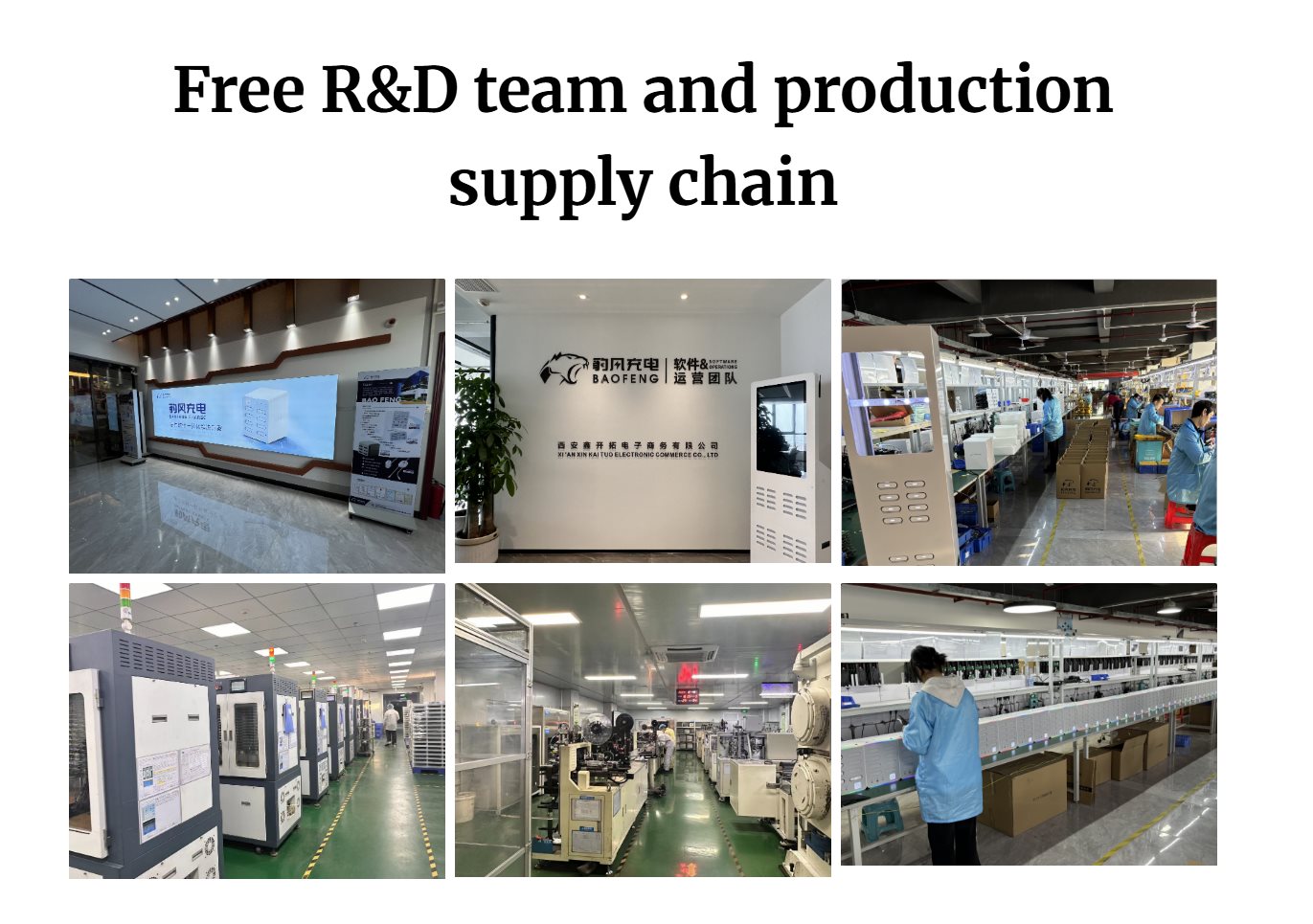
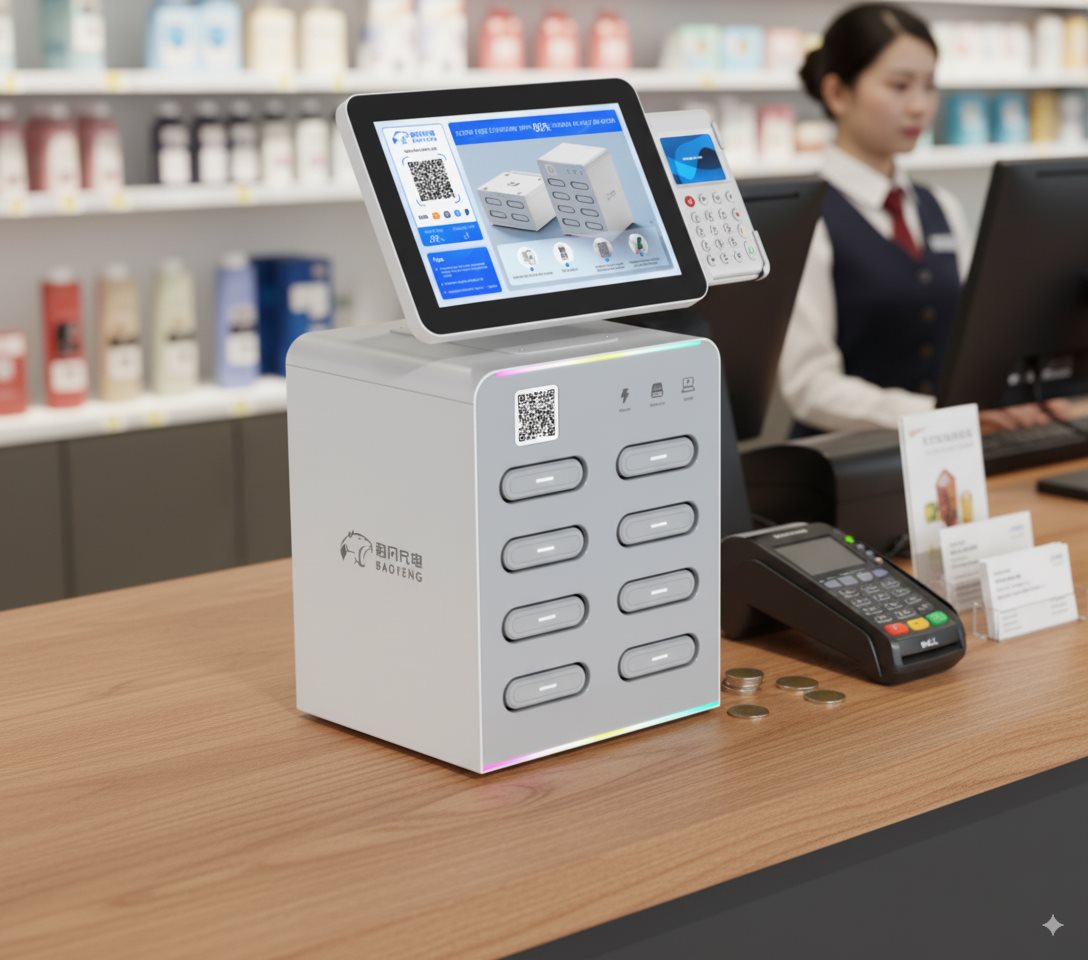
Faced with the overseas payment challenge, Baofeng Charge has already moved ahead. What it provides isn’t just individual hardware devices, but an integrated “device + system + payment” solution designed specifically for international markets.
On the payment front, Baofeng Charge has deeply integrated over 50 mainstream overseas payment interfaces, covering more than 100 payment methods including Apple Pay, Google Pay, PayNow, Visa, Mastercard, and various Southeast Asian local e-wallets. Merchants don’t need to integrate any SDKs themselves – with a single backend configuration, they can seamlessly connect to local user payment preferences. At a London Underground station deployment, Baofeng Charge’s “POS terminal + multi-protocol compatibility” solution achieved over 5,000 daily rentals.
For fund settlement, Baofeng Charge has pioneered an “autonomous collection” model – after users scan and pay, rental fees go directly into the merchant’s local bank card or e-wallet. The brand takes zero commission, zero withholding, and zero monthly settlement delays. This model completely eliminates the deduction risks and settlement delays of traditional platforms, avoiding the up to 15% monthly “leakage rate” that plagues conventional models. The system supports multiple languages and currencies with T+0 automatic settlement, instant withdrawals, and no exchange rate losses.
On the localization front, Baofeng Charge provides specific payment adaptation solutions for Southeast Asia and the Middle East: for Vietnam, deep integration with ZaloPay, MoMo, VNPay, and VietQR covers over 90% of merchant scenarios, raising scan-to-rent success rates to 95%; for Thailand, support for TrueMoney, PromptPay, and Rabbit Line Pay with direct camera scan functionality; additionally supporting Singapore’s PayNow and the Middle East’s MADA card among regional payment methods.
In essence, Baofeng Charge provides overseas shared power bank operators with a fast track featuring zero technical barriers, zero payment license concerns, and zero cross-border settlement risks – even allowing single-device orders, enabling any interested entity to enter the market with ease.

Plan Your Payment Channel First for Overseas Shared Power Bank Success
The business logic of overseas shared power banks is not complicated: place a cabinet in a high-traffic location, the user scans a code and retrieves a power bank, generating a payment. But between “scan” and “complete payment” lie three hurdles: payment interface integration, local compliance, and fund settlement. If any one of these hurdles blocks you, going overseas becomes nothing but theory on paper.
The truly smart approach is: before going overseas, plan your payment channels first, choose a partner who understands payments best, then discuss equipment procurement and site deployment. As Spherical Insights’ latest report indicates, the most successful market entrants are those who prioritize payment infrastructure from day one.
For more insights on succeeding in overseas markets, read our detailed guide on shared power bank overseas market strategy. Baofeng Charge offers a complete closed loop from payment to hardware to operational support – helping merchants avoid detours and ensuring every scan, anywhere in the world, successfully converts into a transaction.